



WHY VIRTUAL COACHING WORKS IN 2026
------------------------------------------------------------
Modern professionals face predictable barriers to maintaining their health: demanding careers, long hours, frequent travel, and high cognitive stress. Traditional personal training sessions, done once or twice per week, often fails because it does not address the realities of daily life. Fitness becomes something squeezed into an already crowded schedule rather than a system that supports performance, resilience, and long-term health.
Virtual coaching addresses this gap by providing structured programming, ongoing oversight, and accountability between sessions. Rather than relying on sporadic workouts, clients receive coordinated guidance that integrates strength training, mobility work, nutrition habits, recovery monitoring, and behavior change. The result is consistency — and consistency produces measurable results.
⸻
A Coaching Model Built for Real Life
Most clients succeed with a hybrid coaching model that combines guided independent training with professional oversight. This approach provides flexibility without sacrificing technical guidance or accountability.
Clients complete most workouts on their own schedule while receiving customized programming, technique feedback, and ongoing adjustments. Live sessions are scheduled when needed to refine movement, troubleshoot limitations, and ensure safe progression. This structure allows coaching to fit into demanding schedules while preserving the benefits of expert supervision.
⸻
Live Guidance and Ongoing Oversight
When live guidance is beneficial, virtual sessions replicate the structure of in-person training. Using a simple phone or tablet setup, I observe movement in real time and provide immediate feedback to improve technique and safety.
Between sessions, the coaching platform delivers individualized programming with video instruction, prescribed training variables, and progression planning. Clients can submit exercise videos for review, ensuring proper execution and injury prevention while allowing continuous refinement of movement quality.
⸻
Movement Assessment and Program Design
Every coaching relationship begins with a movement screening and fitness assessment to identify mobility restrictions, postural deviations, strength imbalances, and movement inefficiencies. This information guides program design so strength is developed without aggravating pain patterns or functional limitations.
Programs are fully individualized and may include strength training, mobility work, posture correction, cardiovascular conditioning, and progressive overload structured around each client’s schedule, travel demands, and recovery capacity.
⸻
Data-Informed Coaching and Recovery Monitoring
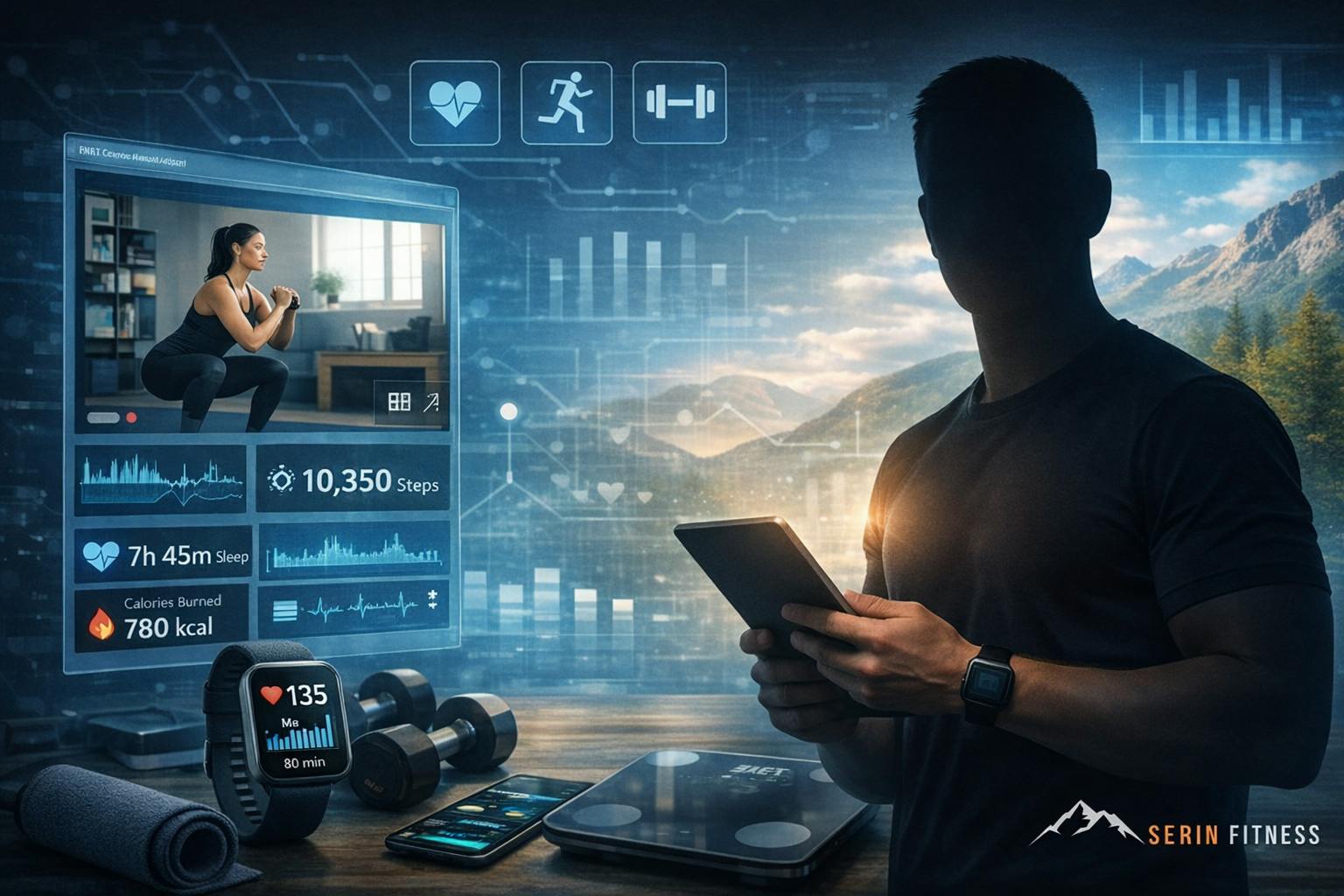
Wearable technology allows training decisions to be informed by physiological data rather than guesswork. Metrics such as resting heart rate, heart rate variability, sleep patterns, activity levels, and training intensity provide insight into recovery, stress load, and adaptation.
This information helps guide training intensity, recovery strategies, and workload adjustments while improving accountability and long-term consistency.
⸻
Nutrition and Lifestyle Integration
Exercise alone cannot optimize body composition, metabolic health, or energy levels. For this reason, coaching includes guidance on nutrition habits and daily routines that support sustainable health improvements.
Nutrition support emphasizes practical strategies that fit real life rather than restrictive dieting. Clients learn how to structure meals, manage energy levels, and maintain consistency while traveling or navigating demanding schedules. For those who require more structure, dedicated nutrition coaching is available.
Sleep, stress management, hydration, and daily activity patterns are also addressed, recognizing that long-term health outcomes depend on lifestyle behaviors beyond workouts.
⸻
Accountability and Behavior Change
Consistency remains the strongest predictor of success. Ongoing messaging support, habit tracking, and scheduled check-ins help identify barriers before they disrupt progress. Clients receive feedback on movement, training adherence, and daily routines while developing systems that make healthy behaviors automatic rather than dependent on motivation.
⸻
Education and Long-Term Independence
An important goal of coaching is long-term independence. Clients learn how to monitor recovery, adjust training volume, structure effective workouts, and maintain results on their own. Understanding how sleep, stress, nutrition, and movement interact allows informed decision-making long after formal coaching ends. Coaching becomes an investment in long-term health rather than a temporary intervention.
⸻
Who This Model Serves Best
This model is especially effective for professionals whose schedules make traditional training inconsistent. Many clients include executives, engineers, healthcare professionals, shift workers, and parents balancing demanding responsibilities. Others are returning to exercise after extended inactivity or seeking to restore mobility and pain-free movement.
It is equally valuable for individuals who want to remain active for travel, outdoor recreation, and physically demanding pursuits.
⸻
Why This Approach Outperforms Traditional Training
Traditional training often provides one or two weekly touch points. Virtual coaching expands support across the entire week, offering more feedback, more accountability, and more precise adjustments while maintaining flexibility. Instead of simply attending workouts, clients have a coach overseeing the systems that influence their health.
⸻
Is This a Good Fit for You?
If you are looking for a structured, science-based approach that integrates training, recovery, nutrition, and long-term behavior change — rather than isolated workouts — this model may be an effective solution.
I’m happy to discuss your goals and determine whether it aligns with your needs.